The Buddhist Wisdom Hidden in Kabir’s Teachings
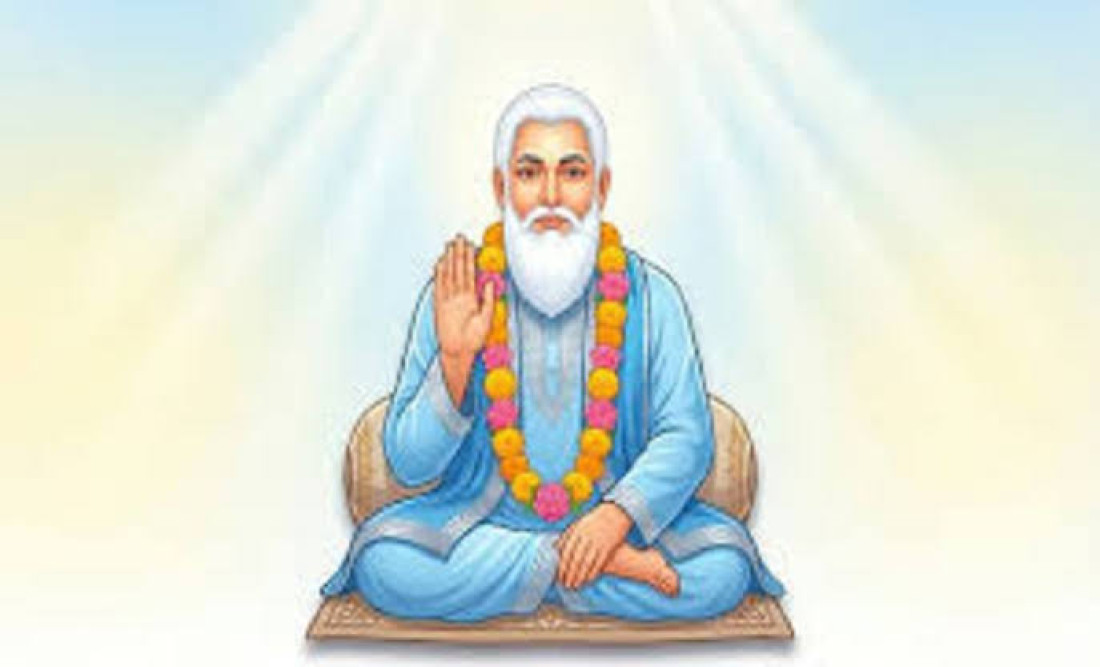
What happens when the wisdom of Kabir meets the teachings of the Buddha?
Kabir is one of India’s most loved spiritual poets. His words are simple, direct, and easy for ordinary people to understand. He spoke about self-confidence, balanced living, compassion, truthful speech, and the importance of finding strength within ourselves.
Interestingly, many of these ideas closely resemble important teachings associated with Gautama Buddha.
This does not necessarily mean that Kabir directly copied the Buddha or openly described himself as a follower of Buddhism. Rather, we can notice similar ideas and values appearing in Kabir’s poetry.
Here are a few powerful examples.
1. Believe in Your Own Strength
Kabir says:
“कर बहियाँ बल आपनी, छाड़ि बिरानी आस।
जाके आँगन नदी बहे, सो काहे मरे प्यास॥”
Meaning:
Rely on the strength of your own arms; do not depend completely on others.
If a river is flowing through your own courtyard, why should you remain thirsty?
The message is simple: do not always wait for someone else to save you.
A person may have many abilities, but those abilities remain useless if they never trust themselves or use their own potential.
The river in Kabir’s example is a symbol of the opportunities and strength already available to us. If the water is right in front of us, why should we die of thirst?
This idea has a strong connection with the Buddhist principle often expressed as:
“Appo Deepo Bhava” — Be a light unto yourself.
The broader message is to develop inner strength, awareness, and confidence instead of depending completely on external support.
Kabir expresses a similar thought through his simple image of a river flowing in one's own courtyard.
2. The Middle Path: Avoid Extremes
Another famous teaching attributed to Kabir says:
“अति का भला न बोलना, अति की भली न चूप।
अति का भला न बरसना, अति की भली न धूप॥”
Meaning:
«Too much talking is not good, but complete silence is not good either.
Too much rain is not good, and too much sunshine is not good either.»
This is a beautiful lesson about balance.
Kabir does not say that speaking is bad. He says that excessive speaking is harmful.
He also does not say that silence is bad. The problem is extreme silence when speaking is necessary.
The same idea can be seen in the Buddhist teaching of the Middle Way.
According to Buddhist thought, we should avoid harmful extremes and learn to live with balance and awareness.
A simple way to understand it is through the example of a musical instrument:
- If a string is pulled too tightly, it may break.
- If it is too loose, it may not produce a proper sound.
- It needs the right amount of tension.
In the same way, life needs balance.
Too much of anything can become harmful—even something that is normally good.
3. Speak in a Way That Brings Peace
One of Kabir’s most famous couplets says:
“ऐसी वाणी बोलिए, मन का आपा खोय।
औरन को शीतल करे, आपहुँ शीतल होय॥”
Meaning:
«Speak in such a way that your ego disappears.
Let your words bring peace to others, and you will also experience peace.»
This teaching is remarkably practical.
Our words can calm someone—or make them angry.
When we speak with arrogance, anger, or disrespect, the other person may react in the same way. Soon, both people become trapped in anger.
But when our words are calm and respectful, they can create peace.
Kabir therefore asks us to let go of “aapa”, or ego, while speaking.
This idea can also be connected with the Buddhist concept of Right Speech, one part of the Noble Eightfold Path.
Right Speech encourages us to become more mindful of what we say and how our words affect others.
So, Kabir’s teaching is not simply about “speaking politely.”
It is about developing a mind that does not need to hurt others to prove itself.
4. Kabir’s Simple Language Was His Strength
Another important feature of Kabir’s poetry is its simplicity.
Kabir did not usually use complicated philosophical language to communicate his ideas. He spoke in a language that ordinary people could understand.
His examples came from everyday life:
- rivers
- rain
- sunlight
- trees
- speech
- work
- relationships
- human behavior
This made his spiritual ideas accessible to everyone.
Instead of giving long philosophical explanations, Kabir could communicate a deep idea in just two lines.
That simplicity is one reason his teachings remain relevant even today.
5. Self-Interest and the Peepal Tree
Kabir also uses a powerful comparison between self-interest and a dry piece of wood:
“स्वारथ सूखा लकड़ा, छाँह बिना दुखदाय।
पीपल परमारथ भया, सुख सागर का मूल॥”
The basic idea is that selfishness is like dry wood. It cannot provide the shade and comfort that others need.
In contrast, the Peepal tree becomes a symbol of paramarth—living for a purpose beyond narrow self-interest and contributing to the well-being of others.
There is also an interesting Buddhist connection here.
The Peepal tree is traditionally associated with the Bodhi Tree, the tree under which Gautama Buddha is traditionally believed to have attained enlightenment.
Therefore, Kabir’s choice of the Peepal tree can be seen as especially meaningful when we read his poetry alongside Buddhist ideas.
It creates a powerful contrast: Selfishness gives little to the world. Compassion and selflessness can become a source of shade, peace, and happiness.
Kabir and Buddha: Different Words, Similar Wisdom?
When we place these teachings side by side, several similarities become visible:
| Kabir’s Teaching | Related Buddhist Idea |
| Trust your own strength | Inner awareness and self-reliance |
| Avoid extremes | The Middle Way |
| Speak without ego | Right Speech |
| Help and comfort others | Compassion |
| Move beyond selfishness | Selflessness and ethical living |
| Peepal tree as a symbol | Connection with the Bodhi tradition |
These similarities are fascinating because they show how spiritual wisdom can appear in different traditions and different languages.
The important point is not simply to ask, “Who said it first?”
The more meaningful question may be: How can these teachings help us live better today?
What Can We Learn From Kabir Today?
Kabir’s teachings remain surprisingly practical.
When you feel dependent on everyone around you, remember the river flowing in your own courtyard.
When you are becoming extreme in your thoughts or actions, remember the importance of balance.
When anger makes you want to hurt someone with your words, remember to speak in a way that brings peace.
And when selfishness becomes the center of life, remember the Peepal tree—giving shade without asking who deserves it.
Perhaps this is why Kabir’s poetry has survived for centuries.
His language may belong to another time, but his questions are still our questions:
- Can we trust ourselves?
- Can we live with balance?
- Can we control our words?
- Can we reduce our ego?
- Can we live not only for ourselves, but also for others?
The connection between Kabir’s poetry and Buddhist thought offers one possible way to explore these questions. Kabir may have spoken in a different language from the Buddha, but the underlying wisdom can sometimes sound remarkably similar.
Different words. Different centuries.
Yet, in some places, a surprisingly similar message:
- Find strength within.
- Avoid extremes.
- Speak with awareness.
And live in a way that brings peace to others.

Manoj Bhiva
Manoj Bhiva is a dedicated writer who loves to write on any subject. Manoj Bhiva maintains a similar hold on politics, entertainment, health, abroad articles. Manoj Bhiva has total experience of 3 years in web and Social. Manoj Bhiva works as a writer in Wordict Post.






Russian Rocket 'Totally Destroys' Dorm, Unknown Amount Dead: Zelensky
Posted on 18th Aug 2022